

.png)
Where Should You Test Ride a Used Motorcycle in Vancouver?
If you’re buying a used motorcycle in Vancouver, the best place to test ride it is somewhere that lets you check low-speed handling, braking, shifting, steering, suspension, and highway performance without putting yourself in heavy traffic.
That usually means starting in a quiet industrial area or side street, then moving onto a route with a mix of stops, corners, hills, and higher-speed sections.
The goal isn’t to take the seller’s bike on a joyride (though if you’re looking to go for a joyride on your own bike, we’ve got a great list of motorcycle routes to take near Vancouver, BC). It’s to find out whether the motorcycle feels safe, predictable, and worth buying.
Quick Answer: Where Should You Test Ride a Used Motorcycle in Vancouver?
The best test ride route depends on what you need to evaluate.
The Burnaby Lake industrial area is useful for low-speed manoeuvres, clutch feel, stops, and tight turns. Barnet Highway and Lougheed Highway give you a chance to test acceleration, shifting, stability, and braking at higher speeds. Marine Drive and Mount Seymour Parkway add hills, corners, and changing road conditions. Dewdney Trunk Road is a better choice when the seller agrees to a longer evaluation.
No single road will tell you everything. A proper used motorcycle test ride should include more than one type of riding.
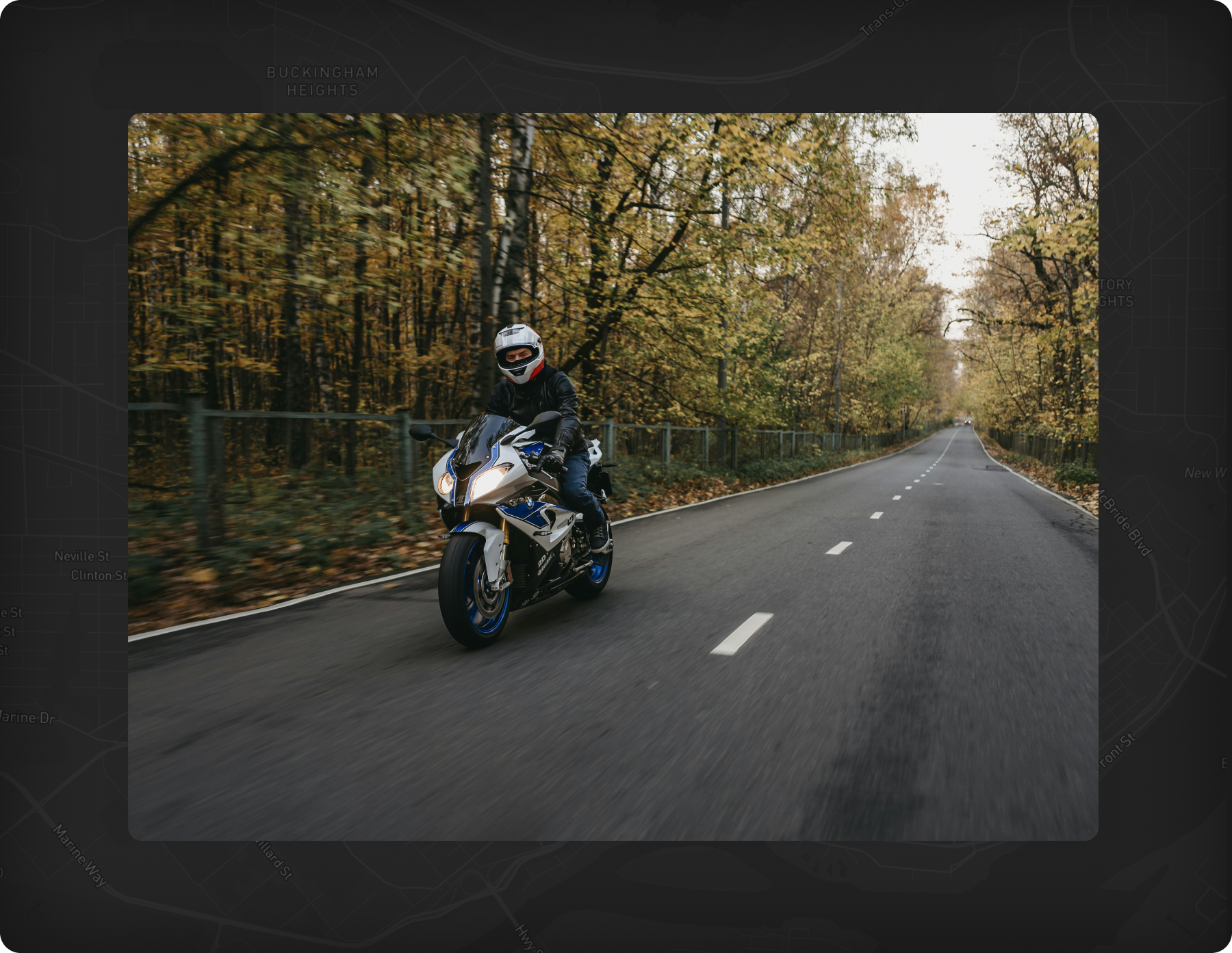
Start Somewhere Quiet
The first few minutes should happen somewhere calm.
You want enough space to get comfortable with the motorcycle before dealing with traffic. A quieter industrial area near Burnaby Lake can work well because it gives you room to practise stops, slow turns, and basic manoeuvres.
Start by noticing how the clutch engages. Does it grab smoothly, or does it feel sudden and unpredictable? Shift through the lower gears and listen for grinding, clunking, or hesitation.
Test the brakes at a controlled speed. The bike should stop smoothly without pulling hard to either side. The levers should feel firm, not soft or spongy.
This part of the ride can reveal a lot before you ever reach a major road.
Use Burnaby Roads to Test Real Riding Conditions
Burnaby is a useful place to test ride a used motorcycle because it offers a mix of industrial roads, hills, traffic, and faster routes within a small area.
Barnet Highway is helpful for testing acceleration and higher-speed stability when traffic and conditions allow. Pay attention to how the motorcycle behaves as speed increases. Does the front end feel stable? Do you notice unusual vibration through the bars, seat, or foot pegs?
Lougheed Highway can also show you how the bike handles normal Lower Mainland traffic–the further away from Vancouver you get, the better. You’ll get starts, stops, lane changes, and enough time in each gear to notice shifting or throttle problems.
Only use faster roads when you’re licensed, insured, comfortable with the bike, and have clear permission from the seller.
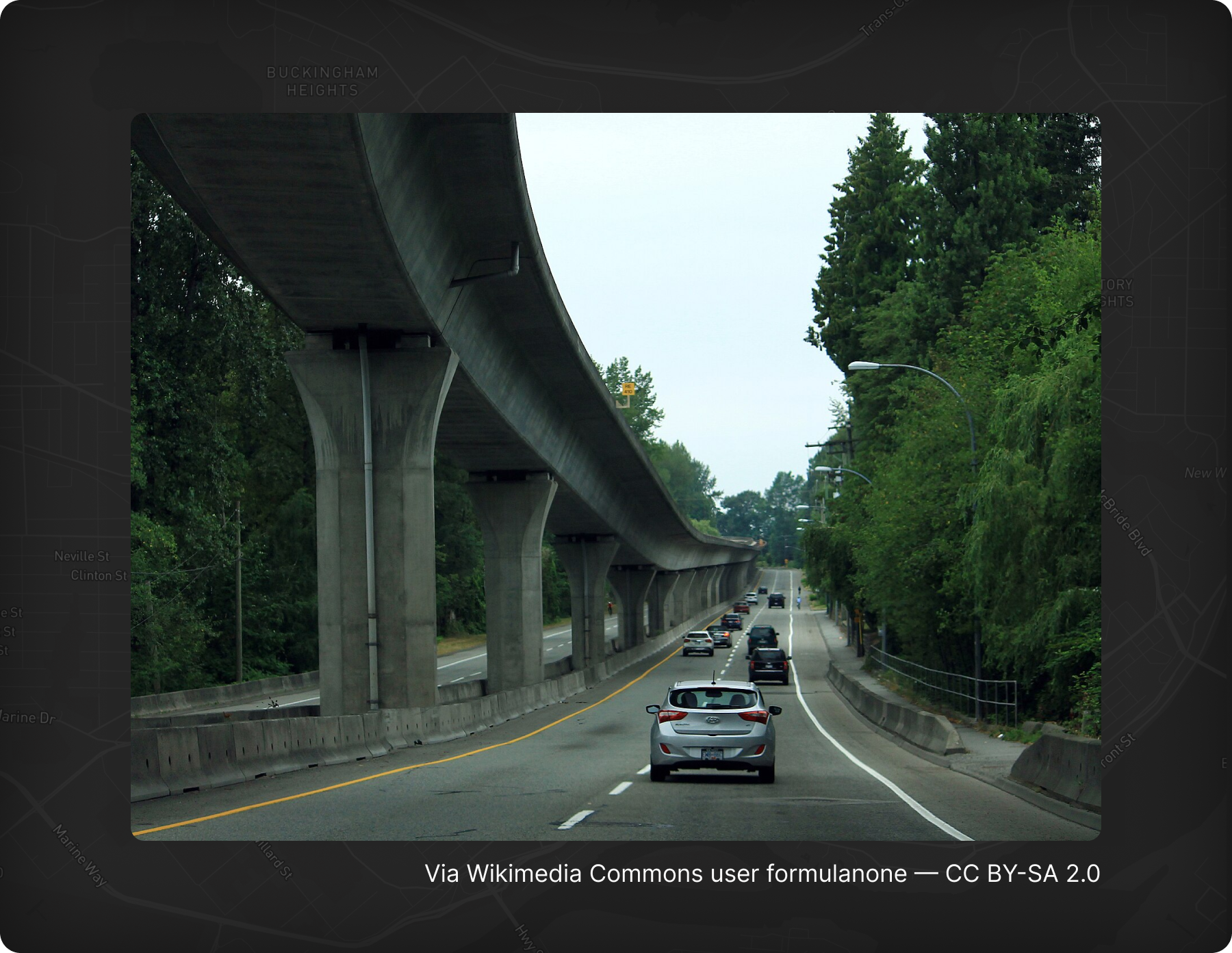
Marine Drive and Mount Seymour Parkway
Marine Drive and Mount Seymour Parkway can help you evaluate a motorcycle under different conditions.
Hills are useful for testing clutch engagement, low-speed throttle control, and how the engine performs under load. Corners can reveal steering or suspension issues that may not show up on a straight road.
Does the motorcycle hold its line through a corner? Does it feel like it wants to fall inward or drift outward? Does the suspension settle after a bump, or does it continue bouncing?
Pay attention to the handlebars as well. If they feel off-centre while the motorcycle is travelling straight, there may be an alignment issue worth investigating.
Keep the test controlled. You’re checking the bike, not testing your limits.
Dewdney Trunk Road for a Longer Test
Dewdney Trunk Road can work for a longer evaluation when the seller is comfortable with the distance.
A longer ride gives the motorcycle time to reach normal operating temperature. That matters because some problems don’t appear when the engine is cold.
A motorcycle may start well but struggle once it warms up. Shifting may become rougher. The cooling system may have trouble keeping temperature under control. An oil or coolant leak may only become visible after the engine has been running for a while.
Longer routes also help you evaluate seat comfort, vibration, and whether the bike feels natural for your height and riding position.
You don’t need to ride all the way to Mission. Even a shorter section can tell you more than a five-minute loop around the block.
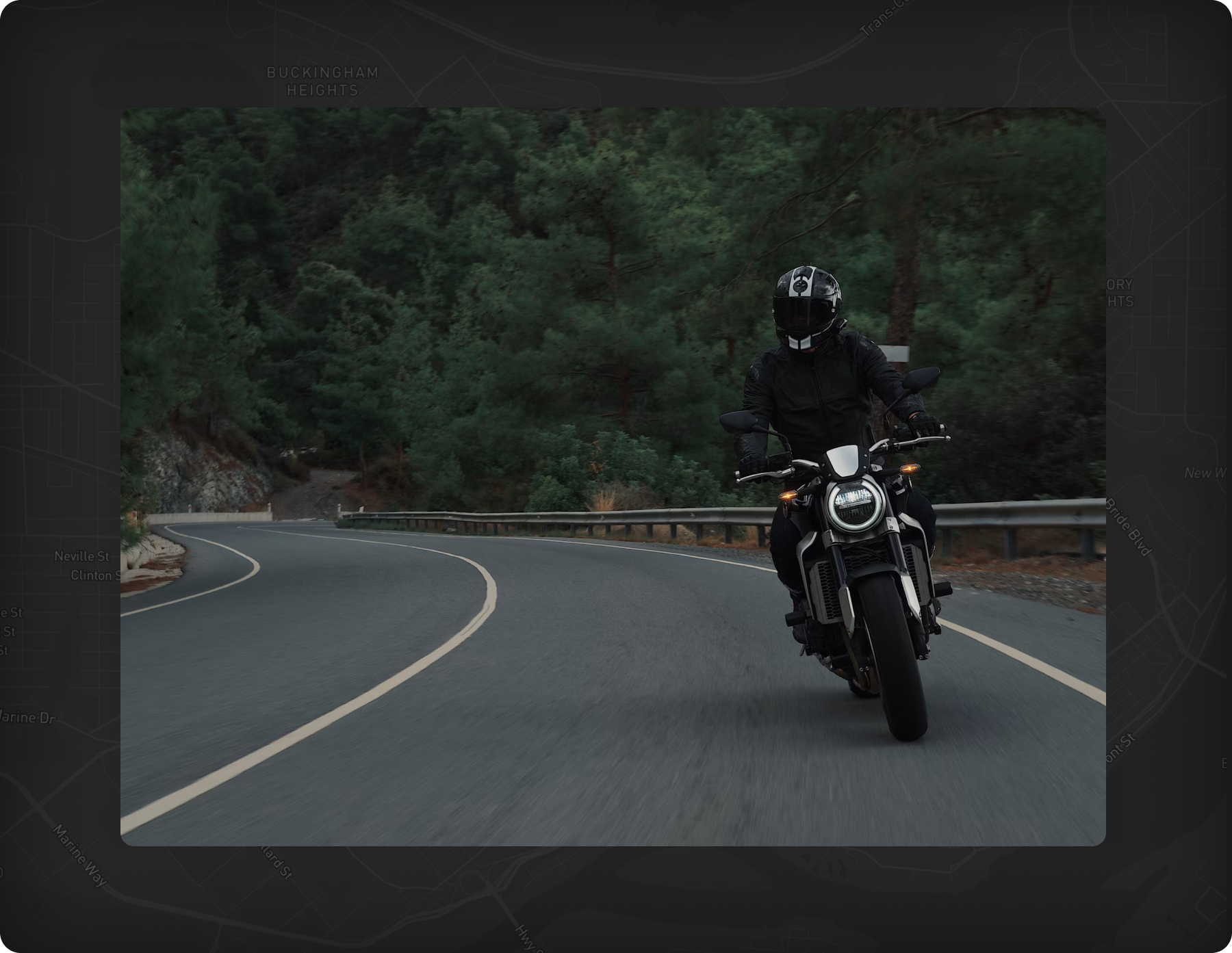
What Should You Look for During a Motorcycle Test Ride?
A proper motorcycle test ride should tell you how the bike feels, not just whether it moves.
Focus on:
- Smooth clutch engagement
- Clean gear changes
- Predictable braking
- Straight steering alignment
- Controlled suspension movement
- Stable acceleration
- Unusual sounds, smells, or vibration
This should be the main checklist you use during the ride.
Listen closely when accelerating and slowing down. Ticking, knocking, grinding, or rattling noises deserve attention. Some sounds are normal for certain models, but you shouldn’t assume every strange noise is harmless.
The bike should also return to a steady idle after you stop. If it stalls, surges, or struggles to restart when warm, there may be a fuel, electrical, or compression issue.
Make Sure the Test Ride Is Legal
Before taking the bike out, confirm that you’re properly licensed and that the motorcycle is insured for the ride.
Ask the seller for permission and agree on the route before leaving. A responsible seller may ask to hold your licence, meet you at a shop, or follow you in another vehicle.
That isn’t necessarily a red flag. They’re handing a stranger the keys to their motorcycle.
Stay within the agreed route and bring the bike back on time. A test ride should build trust between you and the seller, not create another problem.
What If the Seller Refuses a Test Ride?
Some sellers won’t allow test rides because of insurance concerns or the risk of theft.
That doesn’t automatically mean they’re hiding something.
You can ask the seller to ride the bike while you watch and listen. Pay attention to how easily it starts, whether it tracks straight, and whether you can hear unusual mechanical noise.
You can also ask the seller to meet you at Imperial for a free pre-purchase inspection. This gives both sides a neutral place to evaluate the motorcycle without requiring a long test ride.
If the seller refuses a test ride, an inspection, and even basic questions about the bike, it may be time to look elsewhere.
A Test Ride Is Only Part of the Buying Process
A motorcycle can feel good on the road and still have problems you can’t see.
Hidden crash damage, worn bearings, fluid leaks, weak charging systems, and poorly installed replacement parts may not be obvious during a short ride.
That’s why we recommend combining your test ride with a professional inspection.
Our guides can help you prepare before meeting the seller, so be sure to do a review of our most popular content below.
- The Mechanic’s Guide to Buying a Used Motorcycle
- Red Flags to Watch For When Buying a Used Motorcycle
- What Mileage Is Too High for a Used Motorcycle?
- How to Tell If a Motorcycle Has Been Crashed
They’ll also give you a better idea of what questions to ask once you arrive.
Bring the Bike to Imperial Before You Buy
Imperial works on used motorcycles of every make, model, age, and mileage.
A test ride can tell you how the motorcycle feels. An experienced mechanic can help explain why it feels that way. If you’ve found a motorcycle that you think is the one, take it for a proper test ride, then bring it to Imperial for a free pre-purchase inspection. We’ll help you understand exactly what you’re buying before you commit.